




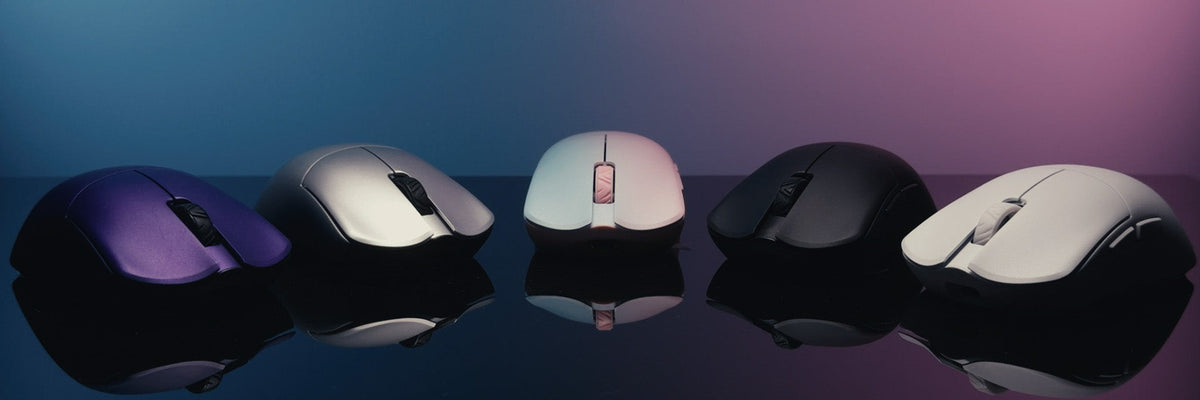
Today, almost every serious gaming mouse uses sensors from the same families. Two mice sold a hundred euros apart can share the same sensor reference, the same type of optical switches and the same polling rate. The component is no longer enough to make the difference. The brand is.
What you choose when you choose a brand is not a spec sheet. It is a line of shapes, a piece of software, a release cadence, a distribution network and a way of treating customers once the mouse is sold. These elements shape your experience far more reliably than any line of specifications.
This page is a map of the market, not a model comparison. If you want to understand what a sensor is, how an optical switch behaves or what polling rate really measures, our complete technical guide to gaming mice covers all of it in depth. If your question is about how much to invest, our dedicated guide to gaming mouse prices breaks the market down by price tier. Here, we answer a different question: who are the brands, where do they come from, and who are they talking to?
🎯 Why the brand matters as much as the sensor
That is the paradox of this market. Raw performance has become accessible at a speed nobody anticipated, and yet the gaps between brands have never been easier to read. They have simply moved.
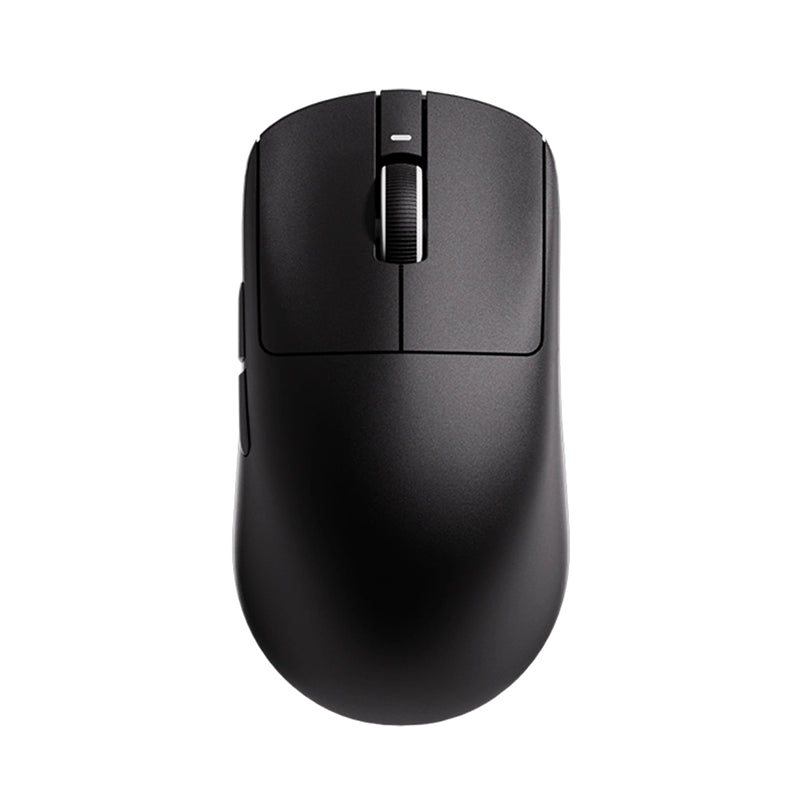
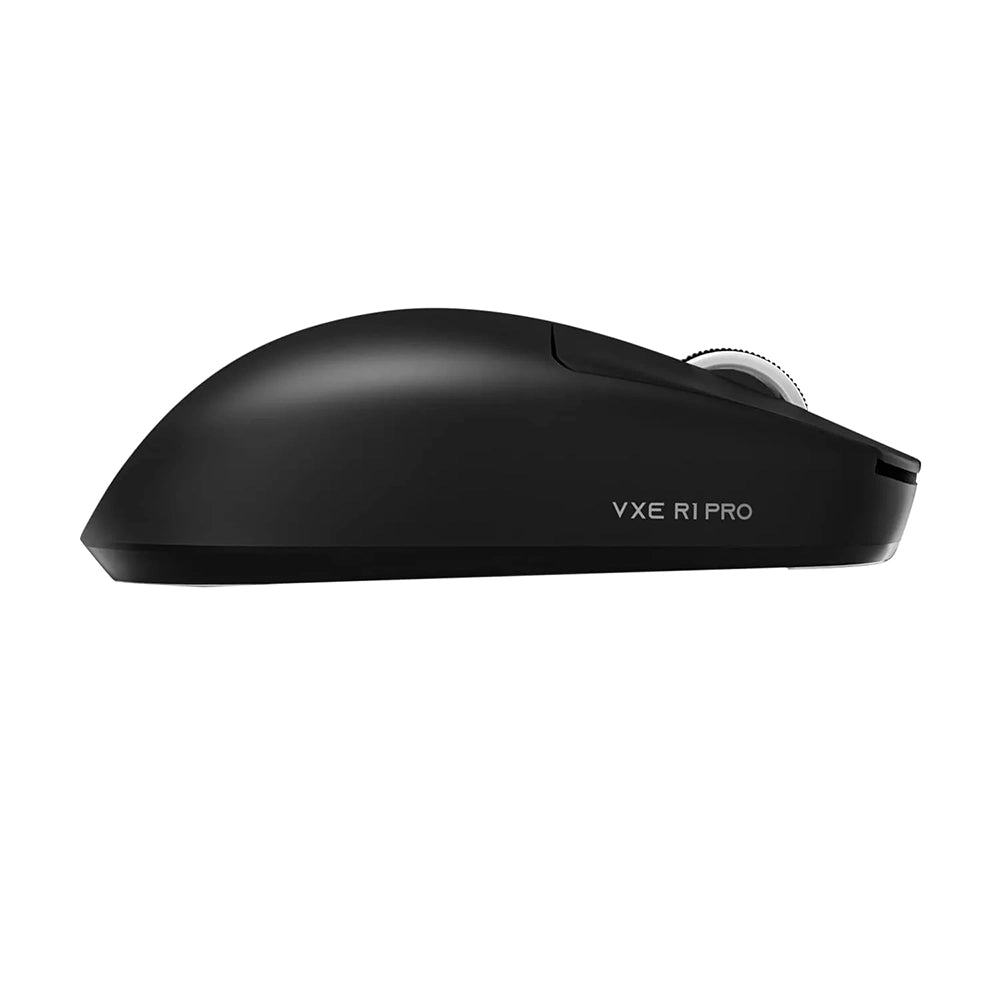
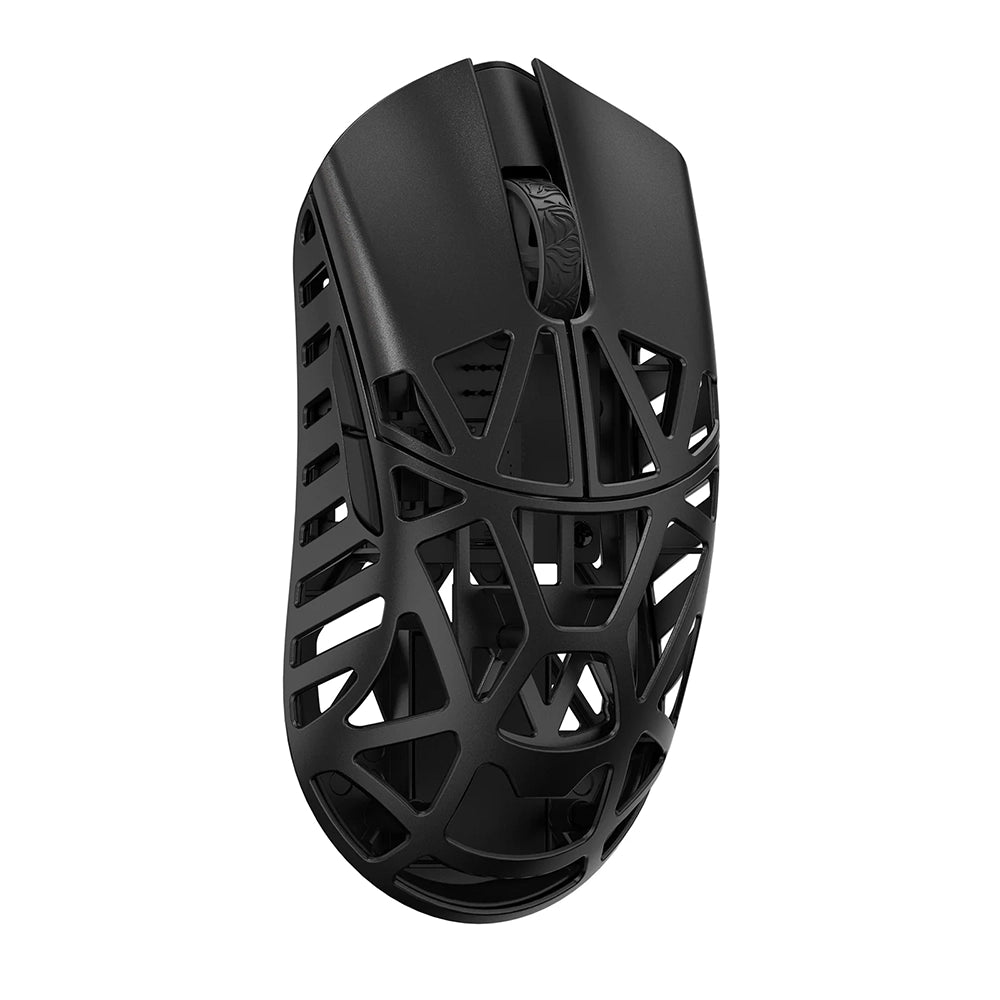
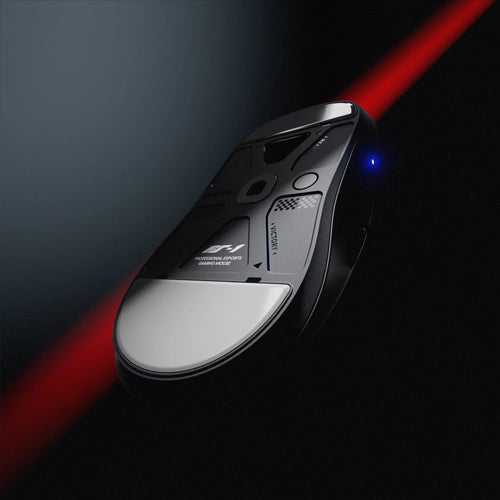
If you want a quick answer, here are four brands we recommend right now, each with one of its flagship models. You will find every brand in our gaming mice collection.




The sensor is still essential, but it is no longer enough
The sensor remains the foundation of any gaming mouse: tracking speed, consistency, lift off distance and wireless power consumption all depend directly on it. But high end sensors have become widely available, to the point where you can find excellent ones under fifty euros. At an equivalent tier, what makes the difference is often the implementation: positioning, lens quality, firmware tuning and consistency from one unit to the next.
In other words, two brands can advertise the same sensor and deliver two different behaviours. It is a question of engineering and quality control, not only of components. Our complete technical guide to gaming mice details what each element really measures and how to read it on a product page.

What a brand really decides: the shape
The shape is the only asset a brand cannot buy from a catalogue. A shell is designed, prototyped, corrected over dozens of iterations, then carried across several generations until it becomes a signature you could recognise with your eyes closed.
That is why players talk about brands rather than models when they change mice. A hand used to a family of shells finds its bearings much faster within the same brand, even when switching to a completely new generation. Conversely, changing brands often means relearning a grip, a wrist angle and the position of the side buttons.

Software and firmware, where the gaps are most visible
This is the area where the hierarchy is the harshest and the most stable. Some brands ship light, stable software with onboard memory and regular updates for years. Others ship a heavy utility, or on the contrary a minimalist tool that forgets half your settings on restart.
A brand that still updates its firmware two years after a product's release is telling you something important about how it works. It is one of the best indicators of seriousness available, and it appears on no box.
🎮 Does the right brand depend on the game you play?
The ideal brand also depends on your game: every competitive scene has its own reference shapes and brands, and what the pros actually use often says more than any sponsorship campaign. Our guide on which mouse to choose for your game (coming soon) goes through the main titles one by one.
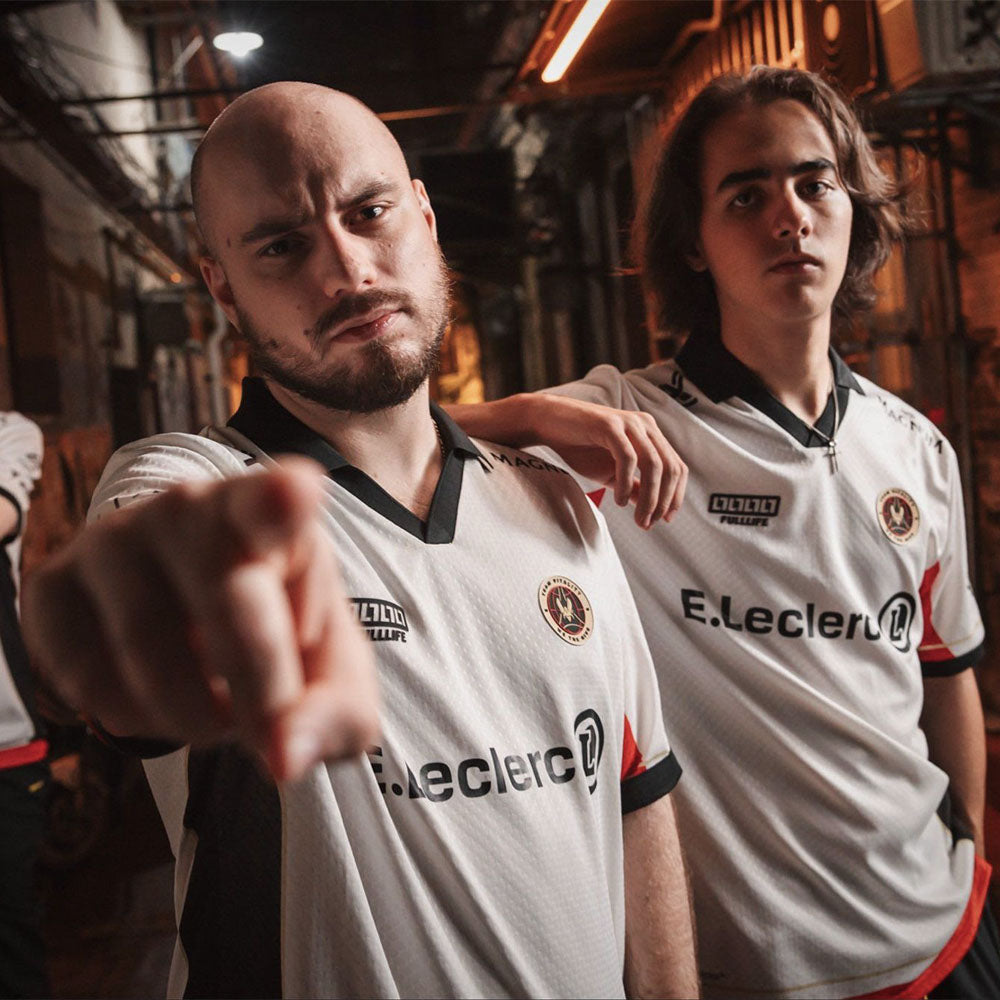
It is also the most misunderstood topic in the industry, and the one where the gap between communication and reality is widest. A brand on a jersey is not necessarily the brand used in matches, and a mouse bearing a player's name does not always have much to do with what they actually use.
Team sponsorship and individual choice
A team contract binds the organisation, not always each player's hand. In several disciplines, players keep some freedom over their mouse, precisely because it is the most personal peripheral in the setup and the one whose change costs the most in performance.
As a result, real usage statistics in competition never perfectly match the sponsor map. Looking at what players use is more instructive than looking at who pays them.
Signature editions, what they are really worth
A signature edition generally comes in three levels:
- Purely cosmetic: a colourway, a logo, sometimes packaging.
- Settings or accessories chosen by the player.
- A real variation in shape or weight developed with them, much rarer.
All three are often sold at the same price level, with the same communication. Knowing which category you are in is the only thing that matters before buying.
Copying a pro setup, good or bad idea
Taking a professional player's mouse makes sense on one specific point: the shape and the size, provided your hand resembles theirs. It makes much less sense for settings, which depend on a playing surface, desk space and thousands of hours of habit.
Our pro config articles detail the full setups of players on the scene: mouse, settings, sensitivity and associated peripherals. It is the best starting point to understand why one brand dominates among the pros of a given game, and why that does not automatically apply to you.
🖱️ How to choose one brand over another
A simple method, in this order. Each step eliminates options and brings you closer to a choice you will not regret six months from now. To go further on the technical criteria, check out our guide on how to choose your gaming mouse.
- Start from the shape, not the brand. First identify the shell that suits your hand and your grip, then look at which brands work on it. It is the opposite of the usual reflex, and yet it is the only order that works. An excellent brand with an unsuitable shape is still a bad mouse for you.
- Check the release cadence. If you keep your peripherals for a long time, a brand with long cycles will serve you better: parts stay available and the shape does not disappear from the catalogue. If you follow the market closely, a high cadence brand will give you access to new releases first.
- Check distribution and after sales support. Before buying, ask yourself three concrete questions: is the product available in local stock, is the warranty easy to apply, are consumables easy to find. Three positive answers are worth more than ten fewer grams.
- Check the ecosystem. Receiver, skates, grips, compatibility with your playing surface. If you already own accessories, staying in the same brand universe makes life easier. If you are starting from scratch, now is the right time to choose a coherent ecosystem.
💰 What the name adds to the bill
With comparable components, two brands can display very different prices. That gap is not arbitrary, and it is not entirely justified either. Here is what it is really made of.
The cost of being present in Europe
Distributing in Europe means forward stock, regulatory compliance, support in several languages and a warranty that applies locally. All of that costs money, and it shows up in the displayed price.
A brand imported unit by unit saves on that structure. The price is lower, but the service that comes with it is proportionally lighter. It is a trade off, not an anomaly.
The reputation premium, and its limits
An established brand charges for part of its reputation. That is real, measurable, and it can represent a significant share of the price. But reputation also covers real things: a lower defect rate, a return handled quickly, a spare part still available three years after purchase.
Promotional cadence changes everything
High cadence brands renew quickly, so they clear stock often. Veteran brands discount less frequently, but more deeply during the big annual sales. Scarcity brands almost never discount at all.
Knowing this mechanism is worth several tens of euros per purchase. Our dedicated guide to gaming mouse prices details the tiers and the periods when aiming above your budget becomes realistic.
🧰 The ecosystem around the mouse
A mouse never lives alone. It glides on a surface, communicates with a receiver, wears down through its feet and gets customised with grips. Brands have very different policies on these topics, and it is a widely underestimated buying criterion.
- What comes in the box. Some brands include a spare set of skates and adhesive grips out of the box. Others ship the bare minimum. On a mouse you keep for three years, that difference represents a real, recurring cost, and it is rarely highlighted on the product page.
- Skates and their replacement. Skates are a consumable. The real question is not whether they will wear out, but whether you will easily find replacements that fit your model. Widely sold brands are well covered by specialised manufacturers. Niche models much less so.
- Receivers and high frequency connections. 4K and 8K connections go through dedicated receivers, and each brand has its own implementation. A dongle is not interchangeable from one brand to another, which matters if you play on several machines or if you lose yours.
Our complete guide to mouse accessories covers skates, grips, wrist rests and receivers in detail, and our dedicated article on 4K and 8K dongles explains exactly how these connections work.
🧩 How the market is organised: four families of brands
The gaming mouse market looks unreadable when you approach it brand by brand. It becomes very clear as soon as you look at it by family. Each family follows a different industrial logic, and that logic explains almost all the differences in price, cadence and finish.
- The mainstream veterans (Logitech, Razer, SteelSeries, Zowie, Cherry Xtrfy). These brands were here before the featherweight trend and will still be here after it. They are defined by long development cycles, worldwide distribution, a warranty that is easy to claim and a presence in physical stores. In return, they often arrive second on innovations, because their validation process is much heavier. They sell security more than novelty.
- The specialists born from the community (Pulsar, Lamzu, Endgame Gear, Waizowl, Pwnage). These brands were born from the enthusiast scene, the one that weighs its mice to the gram and debates the curve of a side for months. They design their shapes themselves and often work in a direct loop with testers and players. Their strength is an obsession with detail on small volumes. Their weakness is the same: limited stock, series that disappear quickly and uneven geographical coverage.
- The high cadence brands (ATK, VXE, Darmoshark, MCHOSE, Scyrox, Ajazz). These are the brands that have shaken up the market in recent years. They release products very quickly, adopt new sensors and 8K connections before everyone else and set prices that the veterans took a long time to match. The trade off fits in one word: cadence. A model can be replaced nine months after its release, ranges overlap and names look alike.
- High end materials and scarcity (WLMouse, Finalmouse). These brands sell materials, machining processes and sometimes organised scarcity: magnesium, carbon fibre, machined shells, limited series. The real gains exist, in rigidity and weight in particular, but they belong to a logic of refinement. You do not buy these mice to fix something missing, you buy them to chase the last few percent, or simply because you like the object.
In house design or existing catalogue
This is the most useful distinction in the industry, and the least visible to the buyer. Some brands design their shell, define their internal structure and validate their firmware. Others select an existing base from a third party manufacturer, dress it up and sell it under their own name.
Neither approach is illegitimate, and the second is responsible for a good part of the price drop everyone has benefited from. But it explains why two mice from different brands can be physically identical, and why the service that comes with them never is.
Brand summary table
An overview to quickly place each player. The price ranges shown are only an order of magnitude: our dedicated guide to gaming mouse prices details what each tier really brings.
| Brand | Origin | Positioning | What sets it apart | Who it's for |
| Logitech | Switzerland | Mid range and high end | Consistency, reliability, pro presence | Safe bet, simple warranty |
| Razer | United States | Full range | Complete ecosystem, brand awareness | Coherent setup from one brand |
| SteelSeries | Denmark | Mid range | Comfort, robustness, longevity | Gear kept for several years |
| Zowie | Taiwan | Mid range and high end | No software, reference shapes | Counter-Strike players, simplicity |
| Cherry Xtrfy | Sweden and Germany | Mid range | Short lineup, understated design | Easy to read catalogue |
| Glorious | United States | Entry level and mid range | Pioneer of the perforated featherweight | Shape that became a reference |
| Pulsar | South Korea | Mid range and high end | Complete competitive ecosystem | Looking for a precise shape |
| Lamzu | China | Mid range and high end | Distinctive shapes, community ties | Players who know the market |
| Endgame Gear | Germany | Mid range | Measurement and engineering approach | Readers of detailed reviews |
| Waizowl | China | Mid range and high end | Obsession with ergonomics | High standards on shape |
| Pwnage | United States | Mid range | Modularity and customisation | Players who modify their gear |
| ATK and VXE | China | Full range | High cadence, aggressive pricing | Best performance to price ratio |
| Darmoshark | China | Entry level and mid range | Recent tech at a contained price | Spec sheet driven purchase |
| MCHOSE | China | Entry level and mid range | Very broad catalogue | Equipping a whole setup |
| Scyrox | Hong Kong | Mid range | Short, readable lineup | Modern without going high end |
| WLMouse | China | High end | Materials and machining | Maximum rigidity, minimum weight |
| Finalmouse | United States | High end | Limited series, rare object | Attachment to the object |
⚡ VXE: performance at the best price
VXE shares the same engineering culture and the same industrial logic as ATK. The brand represents one of the most massive presences on the current market, with a range covering every segment, from very affordable models to fully featured 8K mice.
Its signature is speed: new sensors adopted early, numerous size variants, aggressive pricing. It is for players who want the best ratio between performance and price and who accept a constantly moving lineup.
Read our full guide to VXE mice (coming soon)

💎 WLMouse: materials and machining
WLMouse plays the materials and manufacturing card. Machined shells, light alloys, refined finishes: the brand positions itself at the top of the market and prices accordingly.
Its catalogue has expanded towards more affordable options, but its identity remains that of the technically ambitious object. It targets players looking for maximum rigidity at minimum weight, and those who simply love beautiful pieces.
Read our full guide to WLMouse mice (coming soon)

🌟 Pulsar: the competitive ecosystem
A Korean brand, Pulsar has become one of the most complete players on the market in just a few years. It covers a very wide range of shapes, multiplies collaborations with professional players and develops mousepads, sleeves and accessories in parallel.
Its vision is that of a complete ecosystem designed for competitive play, with particular care given to the range of sizes. It suits players who want to find exactly their shape without leaving the brand's universe.
Read our full guide to Pulsar mice (coming soon)

🐍 Razer: the best known brand in gaming
Founded in 2005, Razer is probably the best known brand among mainstream gamers. It covers the full range of the market, from entry level mice to the most refined competitive model, backed by a software ecosystem and an extremely strong visual identity.
Its vision is that of a lifestyle brand as much as a performance one. It speaks to players who want a coherent setup, with mouse, keyboard, headset and software unified.
Read our full guide to Razer mice (coming soon)

🪶 Lamzu: shapes born from the community
Born in the early 2020s, Lamzu was built in direct dialogue with the enthusiast community and independent reviewers. Its shells are very distinctive, assertive, and often cited as comfort references in discussions on the scene.
The brand moves forward through rapid iterations on a limited number of models. It is for players who follow the market closely and already know what shape they are looking for.
Read our full guide to Lamzu mice (coming soon)

❓ Frequently asked questions
What is the best gaming mouse brand?
No brand is the best in absolute terms. The relevant question is which brand works on the shape that suits your hand, within your budget, with decent availability near you. Three different players will get three different answers, and all three will be right.
Are newer brands as good as the veterans?
On pure performance, yes, without reservation. Brands that appeared in recent years often adopt the latest technologies before established players. The gap remains elsewhere: depth of service, how long parts stay available and the stability of the catalogue over time.
Why do two mice from different brands have the same sensor?
Because sensors are produced by a small number of suppliers who sell them to the whole market. What differs is the integration: sensor position, lens, firmware tuning and production consistency. Our complete technical guide to gaming mice explains what this changes in practice.
Do premium brands last longer?
On average yes, but not for the reason you think. It is not the sensor that fails, it is the switches, the coating and the battery. High end brands use better rated components and stricter tolerances on these specific elements, which are never highlighted on the box.
Is a brand without software a flaw?
No, it is a design choice. A mouse that is fully adjustable through hardware behaves identically on every machine, with no installation or user account. What you lose in fine customisation, you gain in simplicity and consistency.
Should you stay with the same brand when changing mice?
It is not mandatory, but it is often comfortable. Shape lines are similar within the same brand, which reduces the time needed to readapt. If your current mouse suits you ergonomically, looking at the same manufacturer first saves time.
Are pro player signature editions worth the price?
It depends entirely on what they contain. A purely cosmetic edition should ideally cost the same as the standard model. An edition that genuinely changes the shape, the weight or the included equipment can justify a premium. The only rule is to check before buying.
Which brands are easiest to find in France?
Brands with a structured European distribution, which includes the veterans and now a good share of the Asian specialists that go through local retailers. The criterion to look at is availability in local stock, which determines delivery time, returns and access to parts.
Is a very young brand a risk?
A limited risk on the product, a real one on follow up. A recent mouse from a recent brand can be excellent from day one. The uncertainty is about what comes next: firmware updates, parts availability and whether the range will still exist in two years. Buying from an established retailer removes a good part of that risk.



Leave a comment
This site is protected by hCaptcha and the hCaptcha Privacy Policy and Terms of Service apply.